Feeds:
Posts
Comments

Blackberries

I found a few edibles on the farm nature walk today.  The wild blackberries are everywhere, however, they are small.  The larger berries are 3 or 4 feet back, into thicker parts of the woods.  I don’t dare get off the beaten path.  I like nature, I do not like slithery crawling things.  But then…blackberry jam would be awfully good.

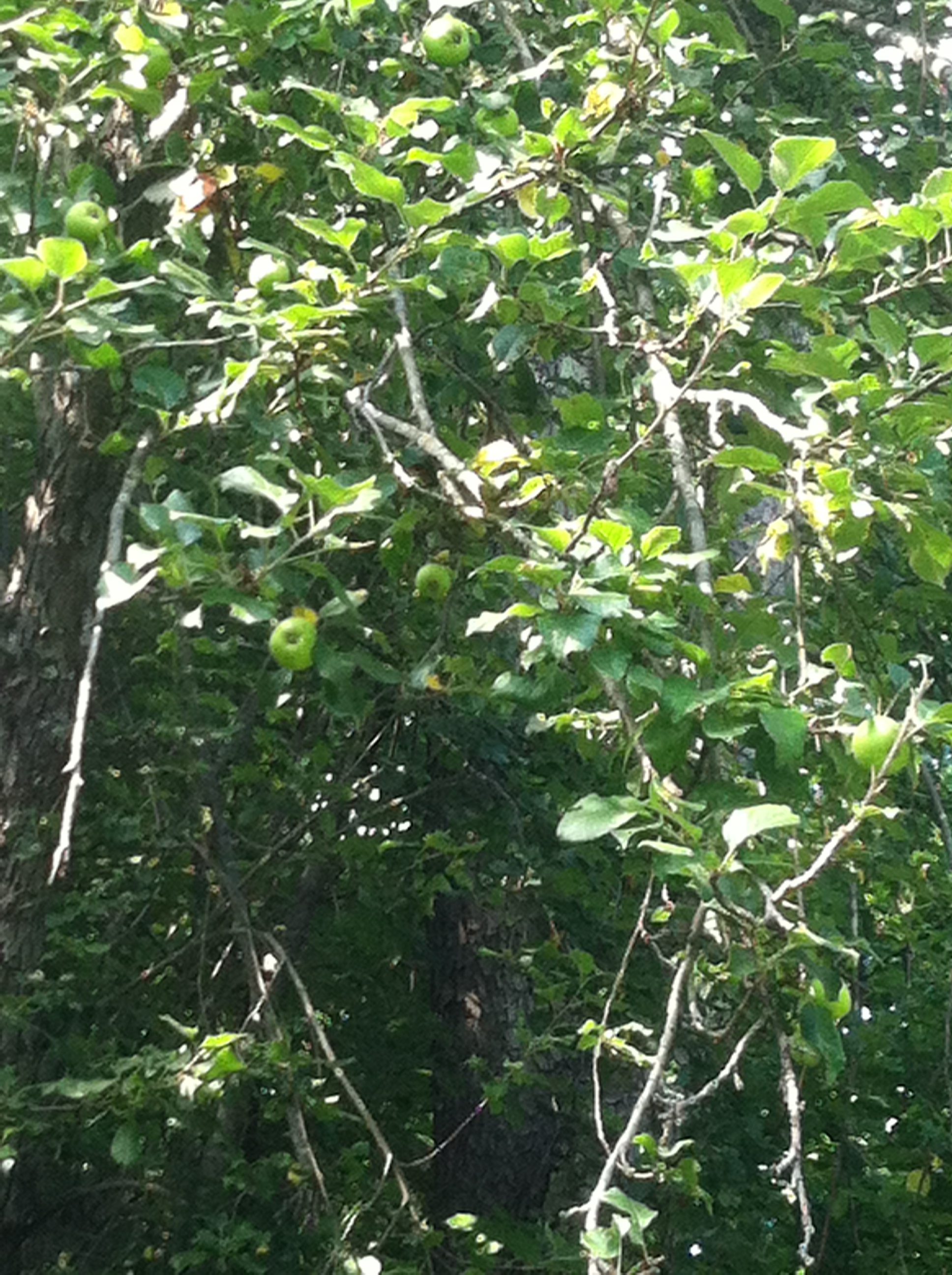
Apple Tree

Apple Tree

I found a huge apple tree.  Being that the apples are small, I thought it might be a crab apple tree.  But the apples are not tiny and round.  It will be interesting to see what develops through late summer and fall, or earlier, if the apples are a golden delicious type.  I apologize for the poor photo!

Lazy Susan

This week, Lazy Susan wildflowers are blooming.  They are mixing in with the Oxetail Daisy.  Very pretty!

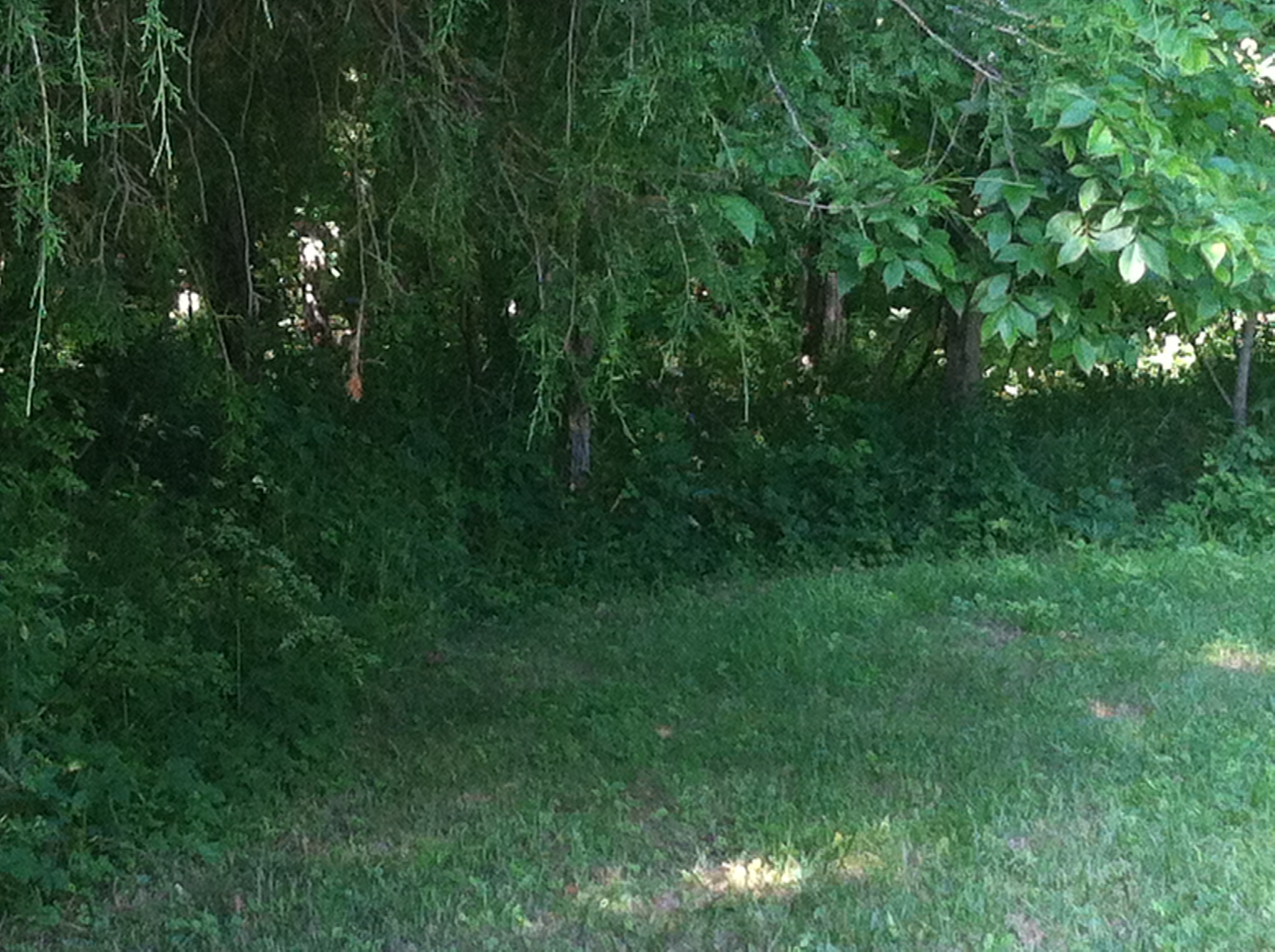
The Park

We call this area our park.  It is about 10 degrees cooler in the shade.  You believe that, right? It is true!  There are no people, no animals, nothing but nature in our “park.”  Yes, we mow it, and hope to put a few benches in place someday.

The Path

Another cool spot down a path (on the way to The Park).  Really, it is a lot cooler in the shade of the thick trees.  I love the old twisted trunk in this photo.

So, there are my finds from this week’s restorative nature walk.  I hope to find more herbs and medicinal plants on future walks.

Glad you joined me!

I can nearly wrap up my thoughts on this week’s Indie Business (@INDIEbusiness) #HandmadeChat into one word – awesome!

The chat rocked and rolled with energy, great questions, and the guest, Alyssa Middleton, of Bath and Body Academy(@bathbodyacademy) lead the chat with very helpful information.  Alyssa is also the CEO at Vintage Body Spa, and the Indie Business Local Director in Louisville, Kentucky.

If you have ever considered selling your handmade products wholesale, or even if you already sell wholesale and are looking for a great discussion on the topic, the transcript to the entire chat is at your fingertips (here).

A sampling of questions and answers from the chat:

@INDIEbusiness question:

What are the benefits of selling wholesale?

@bathbodyacademy answer(s):

More exposure–brick and mortar stores receive a lot of traffic, making your products seen by more eyes.

Selling products at wholesale provides a new revenue stream for your business.

Larger order size-you can state minimum order requirements for wholesale accounts (ie $200.00)

Retailers often place orders a few times a year, less work for you, more volume per order.

I hope you join the Twitter chat next Thursday, 6/28/12, 8p ET, when Naturally Good Soaps (@NatGoodSoaps) shares How To Use Herbs And Natural Colors In Handmade Soap.

Natural Perfume Making www.anniesgoathill.com

Natural Perfume Making

Is a degree, or at a minimal, chemistry studies a necessity for a person that wishes to make natural perfume? No.

Some individuals are more talented at creating blends than others, however, making a masterpiece normally happens after years and years of experience.

In my opinion, if a person is going to delve into natural perfume, or any type of essential oil usage, a base knowledge of essential oils is needed.  Why? For health and safety reasons.  It goes back to the fact that just because something is natural does not mean it is safe.

The natural perfume goal is to create a blend that is pleasant and safe for the wearer.  A 3-day class, or a 3-hour class, can result in a good perfume.  It can, but does not generally result in a perfume that receives accolades around the world.

Why did I bring all of this forward? Opinions are treasured, trust me.  But I will stick to my guns that a degree is not needed to be creative.

boer and dairy goats www.anniesgoathill.com

Annie’s Goat Hill was not something that I planned out on paper.  The farm and the soap company evolved from a passion for natural things, and from a strong life-long love for animals.

I am excited to share with you the featured article that I wrote for the Orscheln Farm & Home Blog.

Each time I write my story I realize how much I have accomplished, and I find that I am excited to share as much as I can.

Thank you to Orscheln Farm & Home, my hope is that the article helps to promote positive inspiration!

Patchouli Lavender Goat Milk Soap www.anniesgoathill.com

Patchouli Lavender Goat Milk Soap

I kept smelling it even though I was not wearing it.  It was not my lotion, nor my laundry detergent, and certainly not my shampoo.  So, why was I smelling patchouli? Not that I minded it at all.

A correctly proportioned perfume hits your olfactory system first with a pleasant top note, a short-lived, light or fresh, essence, or blend of essences.  Pink grapefruit, for example, is one of my favorite top notes.  As the top note dries, the middle or heart note is soon detected.  A middle note lasts longer than the top note that first catches your attention.  One of my favorite middle notes is (euphoric) jasmine grandiflora.  Last, but not least, the base note sticks with the blend, on the skin, for longer periods of time.  Some base notes can be detected a day or two after they are applied.  Base notes can hold a blend together, or can muck it up considerably when excess is used.

Patchouli is a base note.  Patchouli is an essential oil that many either love or hate.  Patchouli, depending upon its strength in a blend, can be detected on the skin days after it is applied.

A customer once said she helped nurse a sick friend back to health.  Her friend adored blends that contained patchouli.  The customer was not a fan of patchouli, not at all.  After washing the friend’s clothing time and time again, the customer that hated patchouli still detected it.  My story ends there, but with a “bingo!”  I personally smell patchouli because I have worn it so many times, from our signature blend Patchouli Love (soap, body cream).  My clothing obviously contains the remnants of patchouli, picked up from the products, and from my own skin.  In my case, I find patchouli to be grounding, so the remnants are a very good thing.

Essential oils are such a blessing, in my opinion.  Thumbs up to nature for providing us with the uplifting top notes, the enchantment of the middle notes, and the seemingly ever-lasting base notes, with much acclamation to how the oils are perceived so differently by each individual!

I absolutely enjoyed being the guest on the #HandmadeChat hosted by @INDIEbusiness, How To Use Milk In Handmade Soap.  Excellent questions were asked!

Here is a sampling of the questions and responses:

From @DonnaMaria @INDIEbusiness – Q: WHERE CAN YOU PURCHASE GOAT MILK FOR YOUR HANDMADE SOAP?

A:  Goat milk can be purchased in health food and grocery stores. It is pricey, be sure to work it into your pricing!

Online search – local 4-H clubs, local goat clubs, or your state dairy goat association for farm locations.

From LaShonda Tyree @SoapCoach – Q: IS THERE A BEST TIME OF YEAR TO BUY GOAT MILK FROM A LOCAL DAIRY? 

A:   I suggest purchasing goat milk during the winter and early spring, when many goat farms have more goats “in milk.”

From Melissa Rivera @NatGoodSoaps – Q:  HOW DOES ONE FIGURE OUT THE SUGAR/FAT/PROTEIN FOR THE DIFFERENT MILKS? 

Melissa’s question never got answered during our chat.  I really do not know how to figure out the different properties of the various types of milk, except, there are charts online, like this one at SELF Nutrition Data.  If you are using powdered or canned milk, the producer should supply labeling.

A link to the full chat transcript is located here, How To Use Milk In Handmade Soap, 6/14/2012, #HandmadeChat.

I look forward to next week’s @INDIEbusiness chat: 6/21, 8p ET, with Alyssa Middleton @bathbodyacademy, How To Approach Retail Stores To Buy Handmade Products.

It is (nearly) summer.  The spring mud season is gone! So, I am going to start a round of Annie’s Farm Photos for those of you that enjoy seeing the country life.

Tiny Tot

The caption should really read Not Spoiled.  She was.  She was the tiniest kid born to Carmella, her full-blood nubian dairy goat mother, about 4 seasons ago.  Tiny Tot lived with us in the house until it was warmth enough for her to face the barn.  Her hooves were the size of my thumbnail.   Tiny Tot is part boer goat, but we still milk her occasionally after she has kids.

The Buck Pen

The buck pen and one of our young boer bucks.

A Path

We have several paths, none all that long, some longer than others.  To me, they are just enough to enjoy.

I will be posting a rather “longish” video that I took last fall while walking one of the paths.  If you like walks in the woods, you’ll love the video!

Hope you enjoyed the farm visit today!

Annie’s Goat Hill Handcrafted  Soaps – Where you can Smell and Feel the Goodness!

I attended the Handmade Chat (#HandmadeChat), How To Make Money Teaching DIY Classes, hosted by Donna Maria of Indie Business (@INDIEbusiness) on Twitter,  June 7, 2012.  The guest was LaShonda Tyree (@Soapcoach), the owner of Handmade Soap Coach.

Before I go any further, I must say that I am so enthused that the Indie Business Handmade Chat has fired back up!

I love a good Twitter chat.  Why is that? I always learn something new.  I always make a new friend or business contact.  I always come away from the chat with a renewed perspective. There is nothing like a group of people sharing their thoughts, ideas, and expertise.  It simply rounds things out! It is a great tool for business.

So, what were some of the hi-lights from this week’s Handmade Chat? I will sum it by posting a few of the questions and answers!

INDIEbusines question Q2:

WHAT ARE YOUR BEST TIPS FOR STARTING TO TEACH #DIY CLASSES WITHOUT BEING OVERWHELMED?

LaShonda answered A2A:

Don’t try to teach everything at first. Choose what you’re best at, do it well.
Focus on your strengths.

I love this response! Those of us that enjoy creating handmade products often learn the hard way to not make everything that we love.  We learn to keep it simple.  We learn to sell what we are good at creating.  Apparently, where DYI (do it yourself) classes are concerned, it is also best to streamline only to what we are best at!

INDIEbusiness Q3: WHAT ARE THE BIGGEST CHALLENGES TO MAKING A PROFIT TEACHING #DIY CLASSES?

LaShonda answered A3a: Charge what you’re worth. So many undercharge, and end up barely breaking even or losing money. Do the math!

Again, this holds so true for the handcrafted industry.  Charge what you are worth, what your products are worth! Handcrafted soap, for example, is a luxury.  Handcrafted soap takes time to make (market and package), and contains ingredients that are expensive and sometimes unique.  It only makes sense to ask for the full value of your class, your handmade product, or for your service.  This is very important!

LaShonda added A3c: Be sure to charge a materials fee so you don’t eat that cost. People often overlook this!

I love LaShonda’s point here.  A handmade instructor, or even a handmade product maker, should always include all of their materials in the price that they set.  Every penny counts!

I am preparing to offer handmade soap and lotion classes locally.  Thank you to LaShonda Tyree, the Handmade Soap Coach, for sharing your expertise!

The full transcript to this Handmade Chat is available here.

Annies Goat Hill (@anniesgoathill) will be the guest on next week’s Handmade Chat (June 7, 2012 at 8:00 EST).  We will be talking about How To Include Milk In Handmade Soap.  I look forward to it! I hope to see you there!

apples www.anniesgoathill.com

In this age of technology it is easy to fall into the pit of comparing ourselves, or our businesses, to others. The surface becomes slippery when we start pondering, “What am I missing?”

More times than not, we are not missing anything. We are unique. And we need to work at doing what we do best, rather than glancing over the fence line for self-measurement.

Savor your distinct qualities. Unless you enjoy giving yourself beatings for not being like your neighbors. I have better things to do…you too?

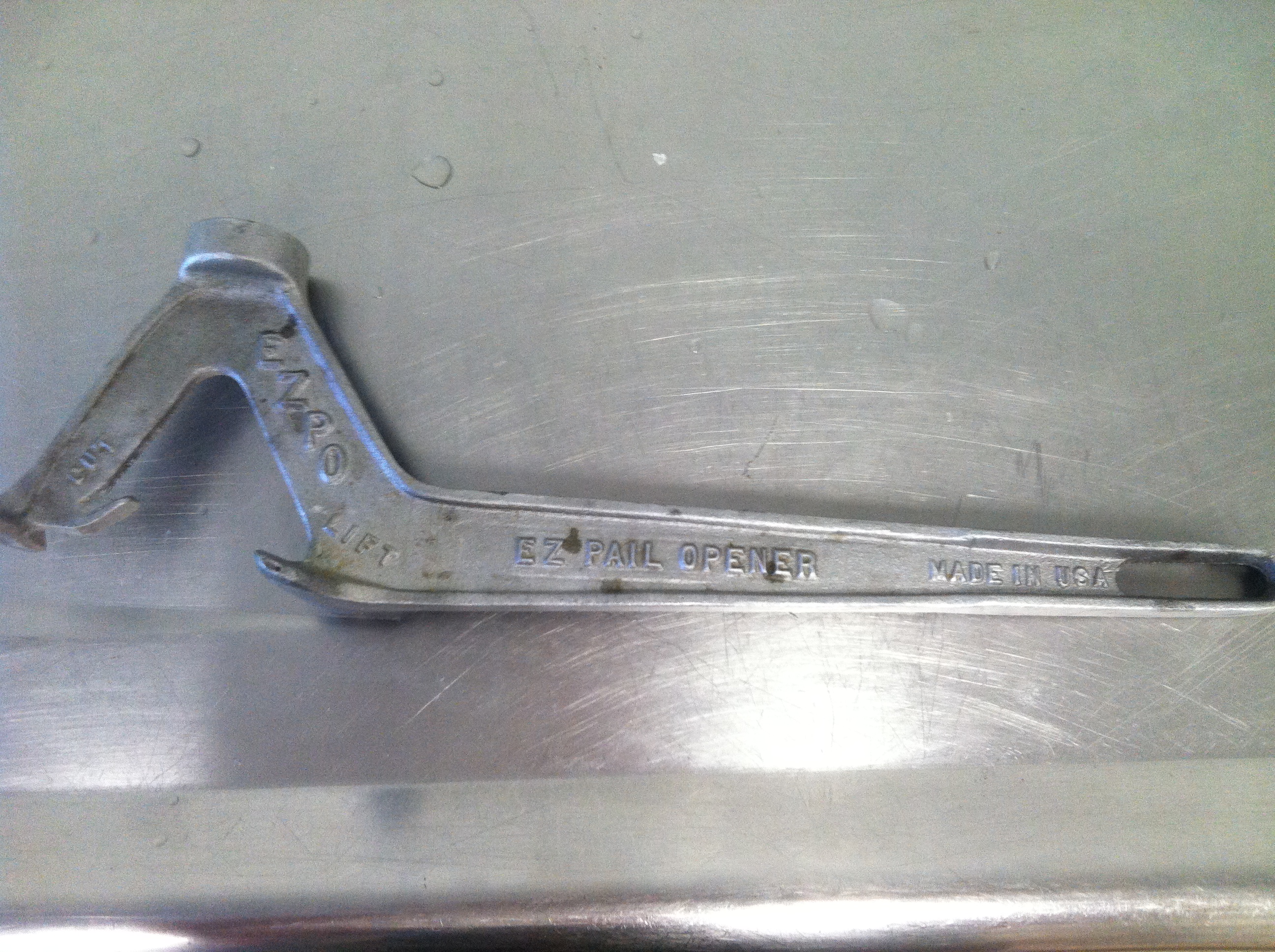
For my soap and cosmetic maker friends that do not have one of these handy tools, a pail opener, I am blogging this for you.

We purchased our very handy pail opener at a restaurant supply house a decade ago.  I wouldn’t be without it!

How to use the pail opener:

  • When you receive a new 50-lb bucket (or similar large size) you must first pull off the perforated strip of plastic located around the bottom perimeter of the lid. This can be done by hand.  The strip acts as a heavy-duty safety seal on the bucket.

  • Around the perimeter of the lid are perforations for holes, spaced about 4″ apart.  To cut a hole, place the prong (prong located next to the word cut on the opener) under one of the hole perforations.   Pull the handle outwards and downwards (away from the bucket).  Continue working your way around the pail until all of the holes have been opened.

  • Place the flat prong (located next to the word lift on the opener) under the pail edge.  Pull outwards and downwards (away from the bucket).  Repeat every 4-6″ until the lid is released.

Save your hands, don’t “leave home” without one of these gadgets!

Design a site like this with WordPress.com
Get started