Feeds:
Posts
Comments

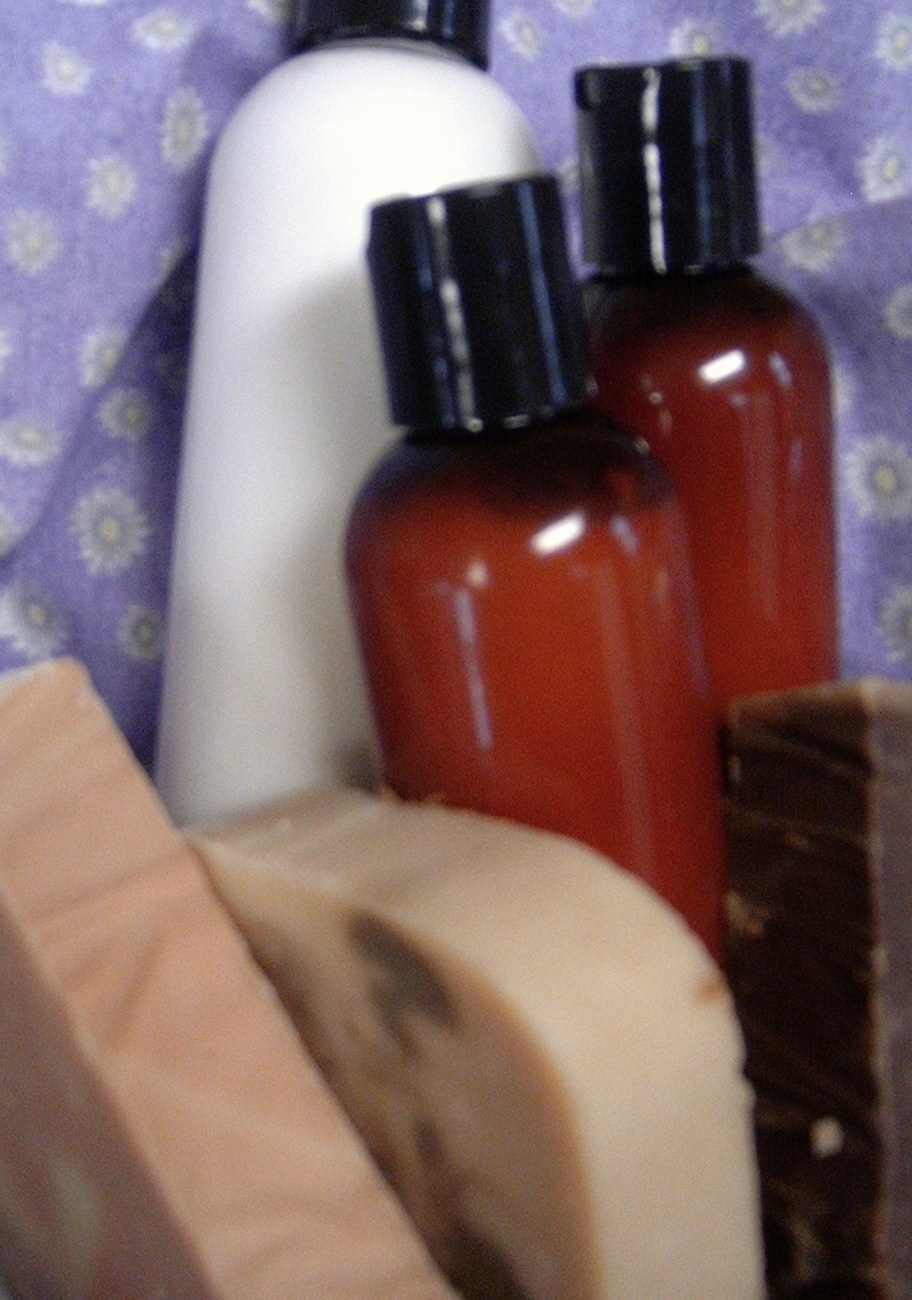
Goat Milk Lotion

Today is a foggy, drizzly day on the farm. The goats do not like this type of weather either. But, the reminder is, there is a season for everything. I love the fog, but the drizzle and mud I can live without. What a beautiful Christmas day we had yesterday, and there are more of those to come. πŸ™‚

I spent a few hours in the shop earlier this afternoon. The outcome should make a number of people happy (including myself) with fresh goat milk lotions. The “When will you have it?” question has been asked a few times, and I now have responded. Keep your suggestions flowing, because I want to hear!

I catch myself reading the ingredient labels on everything now. I used to buy a beauty product, such as face cream, because I liked what was written about it on the package, or because I was familiar with the brand name, but now I read the ingredients and find myself grimacing at what we might be absorbing into our bodies. I can see myself never buying many of the mass-made department store body care products again. There are certain ingredients that must be included, such as a preservative, or many of us would become sick, but my goal is to make the best products for the skin with the least amount of additives as possible.

I am heading out now to the shop to put the caps on the bottles. And then I will head to the barn to feed the girls. They do not look too happy out there today! Once they start pulling and chomping on the fresh hay, they will be happy campers again. Quite the characters they are!


I am thoroughly enjoying the research of the basic ingredients used in soap, lotion, and bath product formulas. We tend to get comfortable with purchasing these ingredients, and quickly forget why they are so important.

A basic ingredient in many formulas is distilled water. There are definite reasons for using distilled water (not tap, drinking, or purified water).

Distilled water is bottled water. It is obtained from boiling water and condensing the steam. The condensation is collected in a sterilized reservoir, bottle or container.

The condensation that is collected results in water that contains no chemicals, toxins, bacteria or waste. The water also contains no particles. This means that distilled water will not contaminate the sterile product that we are working to achieve, nor will it leave any residues (such as lime or hard water deposits) in our product. Treated drinking water will leave behind these types of deposits.

Since the beginning of time, distilled water has been an essential part of life. In nature, the sun heats and evaporates water, leaving impurities behind. The condensation returns to Earth in the form of precipitation, either rain or snow.

A few extra tidbits regarding distilled water..it is said that Julius Ceaser distilled water to keep his troups well hydrated. Surprisingly, it is still common in many locations for sea water to be distilled to produce clean, safe, drinking water. Interesting!

The next article will cover a base oil commonly used in soap and skin care products, coconut oil.

A Beautiful Morning

Good Morning!

Today is my “big boys” turn on the blog. Spike is a gentle lug! At 80-100 lbs, his looks meet up to his name, but he leans towards liking to be smooshy. The girls rule the roost in their boxer queendom around here.

It feels good to wake up to a new day. Today I am going to “detox,” not literally…but there is going to be a lot of water guzzled, less caffeine, and the plans are for NO junk food.

I posted an ingredient article this morning. The topic is distilled water. I started it a day ago, just did not publish at that point. Surprisingly, it got placed in the spot where I started it, not where I wanted it to be published today. Going to head now to move it around…hoping for it to not be buried!

I never grow tired of this scene. Right now, today I look out the office window and see a similar view (as the one from this summer photo). My girls are gathered around, soaking in some December sun. Some are chewing their cud, some just curled up for a nap, some are playfully butting heads. Most are motionless, obviously very relaxed. And I consider them beautiful.

What is it about a goat? Why do I feel compelled to allow the warm goat kisses on my nose each day? Why do I stand still hoping for the daily nibble on my nose, or the sniffing of my neck? Why do their friendly, inquisitive eyes draw me in?

We raise boer and dairy goats. Amongst the dairy, the nubians outrank by numbers. This admission can cause silent, and not so silent wars amongst “goat people,” but I’ll openly admit that my favorites are the nubian does, especially the nubian doelings.

I bottle raise every dairy kid born on our farm. My original dreams were to open a commercial dairy operation. I have not given up on that thought, however, for now, the Ohio red tape is daunting, and I am satisfied with using fresh milk in my soap, lotion, and cheese. I then have just enough milk for the dairy kids and the few boer kids that happen along and need human intervention. With all of this being said, dairy kids tend to adopt the human parent, the one that provides the feedings, especially the nubian kids. They can be quite noisey, with some of their “Mawwww” bellows, but I certainly do not mind. They are a special animal. Loyal as in pets (trailing behind like a loving dog), yet graceful and beautiful as in a deer, and silly as in no other species!

Am I in love? Yes! Am I blessed? Yes! Even in these challenging times, I find ways to make sure the goats stay. I try to take each one and hold them to a purpose. They have a job to do, each and every one of them, and for me the job extends out to a daily dose of caring for the animals that I love.

Merry Christmas

Merry Christmas to everyone!

In my estimation, we do not know the true day that Jesus was born. But the marking of the calendar with the celebration of His birth is beautiful to my heart. Traditions carried forward for thousands of years with the deepest of meanings, remind us all of the glorious birth.

May peace be with you. God bless!

Contest Winner

The winner for this week’s Wash Your Monday Blues Away contest is Fondaleette D., from Michigan! Within moments of the contest start time yesterday morning, Fondaleette found the GC initials inbedded on the My Herd photo album page on the Annie’s Goat Hill website. She whipped that email right out to me! πŸ™‚ Fondaleette chose a bar of baby powder scented goat milk soap. Fondaleette is a great friend, one I have known for several years. She is a busy grandmother, mother, and is a sister to Amy, the winner from last week’s contest. She also tries to send a lot of her Michigan snow down to Ohio, despite me asking her not to! Congratulations, Fondaleette!

Olive oil is a popular ingredient in soap and body care products.

For thousands of years, olives have been squeezed or pressed to obtain the oil. This is a photo of a Greek olive press. Many people across the world (especially in European and Mediterranean countries) are still obtaining their olive oil using this laborious method.

It is said that the Egyptians knew the moisturizing benefits of olive oil. They generously applied the oil to their skins, then scraped the oil off, which removed the dirt and left the skin softened.

It is estimated that olive oil was first used in soap around the year 1567. Today we continue to make castile soap, with olive oil being the base oil in the recipe. Castile soap is mild, moisturizing, long lasting, with a creamy low-bubble lather.

There are several types of olive oil. The main types are:

  • Virgin – the oil is derived using physical methods (olives are crushed or squeezed)
  • Refined – the oil is derived using physical methods, but is treated to reduce strong tastes and acids
  • Pomace – the oil is extracted from crushed olives (the pomace) using chemical solvents, then it is refined to make it edible (generally used in commercial kitchens)

Olive oil has many external and internal beneficial properties. Olive oil is an antioxidant, is very cleansing internally to the body. Olive oil can help lower bad cholesterol and raise good cholesterol levels, especially when olive oil replaces unhealthy fats in the diet. Olive oil is very well known for skin moisturizing, especially adding benefits to mature skin. Olive oil is not known to clog the skin pores.

In soap, olive oil is used as a base oil (alone) or with other base oils to help harden the finished product, and to provide extra moisturizing properties to the soap. In lotion and cream products, olive oil leads to a thicker, richer base, and is very beneficial for dry skin.

The Wash Your Monday Blues Away contest continues (start time in 5 minutes)! The original rules apply. I am having fun with this, and I cannot wait to see who wins a bar of soap this week!

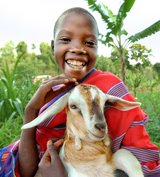
I have been catching bits and pieces of these types of programs via the internet and written articles. This morning on a national news program they discussed helping other countries through purchasing items that seem rather unusual to most of us, but these items expand in their usefullness. One such item is a goat.

I am not going to directly quote any particular program, nor am I going to endorse a program, I have nothing to back me up. But I can tell you what I have picked up on in my readings.

Some of the charities will accept your donation for the purpose of providing a family with a goat. The program teaches the family, and especially the goat care giver (normally the mother of the family), how to care for a goat.

The dairy goat is milked, providing milk for the family, and excess milk generally is sold by the family, which is extra income. I drink goat milk myself. I stand behind the great wealth of its health benefits!

Goats are proliferous breeders, so one healthy goat can lead to 3 or 4, and more in a couple of years span, which also helps the families income. Buying that first goat is what they need help with, and the education of how to care for the goat.

In my own opinion, this is a wonderful way to help others, with a twist to it!

To keep myself out of hot water, the photo belongs to one particular charity, http://www.worldvision.org/ .

Annie

Today I am writing this in very good spirits.

Just who is Annie?

It is not me. Annie is a boer goat.

Annie was our first bottle kid. She was given to us by a very good friend, who was already inundated with a house full of bottle kids.

It was a cold, damp, miserable morning and both of my friends needed to get to work. I received the phone call for help. Please come rescue this orphan, raise her on your farm. The question was worded, “Can you come and help? Helen (a school teacher) needs to go to work!”

Was I ever nervous! We brought her home with the bottle of frozen colostrum (I still have the tiny bottle). We made sure she was dry and comfortable, then we left to buy some kid supplies (nipples and milk replacer). We arrived back home to what we thought was a dead kid. Annie slowly opened her eyes, apparently from a good rest. We jumped for joy. Silly people, we were!

As Annie grew up, she loved to sit in my lap and chew her cud. She weighs in now at 150-170 pounds, too large to sit in my lap. And now she even has an attitude. But she is still our first bottle baby, and she will always be special. Special enough to be the farm mascot.

I didn’t note in yesterday’s blog, I will do an ingredient article weekly (at the minimum), hoping to write them more often!

Have a wonderful Saturday!

Design a site like this with WordPress.com
Get started