Archive for the ‘Products’ Category
Goat Milk Soap-Orange Mint & Honey Oatmeal
Posted in Products, tagged Goat Milk Soap on April 24, 2009| 5 Comments »
Color In The Goat Milk Soaps
Posted in Products, tagged Goat Milk Soap on April 22, 2009| 7 Comments »
Shea Butter For The Hair
Posted in Products, tagged Shea Butter on April 7, 2009| 4 Comments »
Goat Milk Soap With Color
Posted in Products, tagged Goat Milk Soap on February 18, 2009| 8 Comments »


I really did not need to take a pic of this one. It is two toned soap, no swirls. Should be a fun violet and white bar, a spring flowery type of soap.
Join me tomorrow at cutting? The camera will be in tow!
Ingredient Article #5 – Shea Butter
Posted in Products, tagged Goat Milk Lotion, Goat Milk Soap, Shea Butter on January 30, 2009| 20 Comments »
Shea butter, sometimes called shea nut butter, is a common natural fat used in soap, lotion and cosmetic formulations.
Shea butter is derived from the fruit (kernel, nut, seed) of the shea tree, strictly from West Africa. The harvest process is a female activity, and is very beneficial to the West African economy. A 20 year old shea tree begins to produce the shea nut. Shea trees, interesting enough, do not reach full production until they are 45 years old!
The fruit of the shea tree contains 50% fat, yellowish or ivory shea butter, which is obtained through a crushing and boiling process.
One surprising fact about shea butter is that it is also used for cooking in West Africa. Some use shea butter as a substitute for cocoa butter in chocolate.
Shea butter contains antioxidant properties, such as vitamin A and E. It is a moisturizer and emollient. Shea butter is used to treat scars, eczema, burns, rashes, blemishes, dry skin, itching, skin allergies, and wrinkles.
Speaking of allergies, there is debate regarding allergic reactions to shea butter. Even though shea butter is derived from the nut of the shea tree, many say that the nut does not fall into the “normal” category of nut allergy families. If you have an allergy to nuts, I would advise talking to your allergist prior to using a product that contains shea butter.
Did you know that shea butter, when applied directly to the skin, can provide a light ultraviolet protection, sometimes as high as SPF6? Do not count on it as an ultimate natural sun protection product, as the SPF value does vary.
As promised, I will be following up with an ingredient article on palm oil. It is taking a bit more research, but it is on the way.
AGH News
Posted in Products, tagged Goat Milk Soap on January 27, 2009| 5 Comments »
I have signal this morning, very surprising. We are to receive up to 12″ of ice and snow before the weather system passes on.
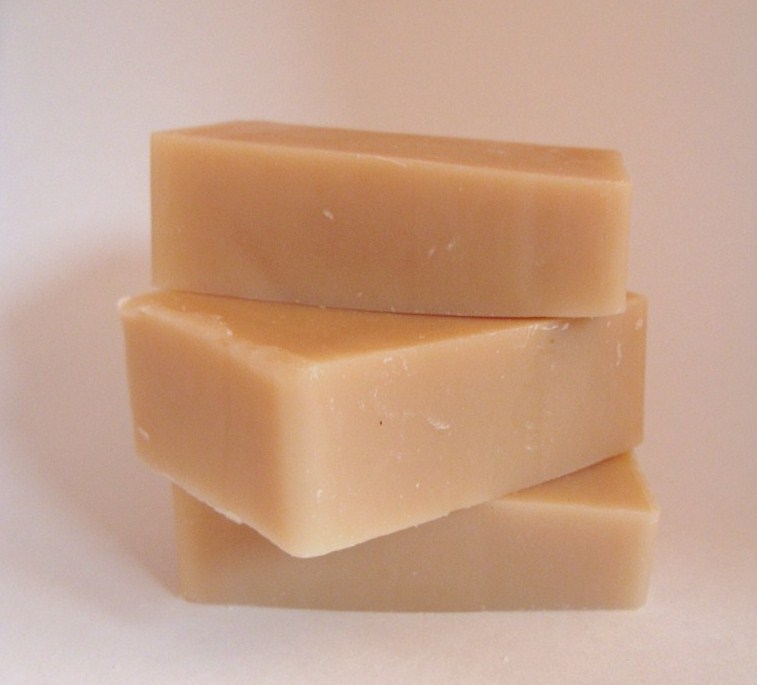
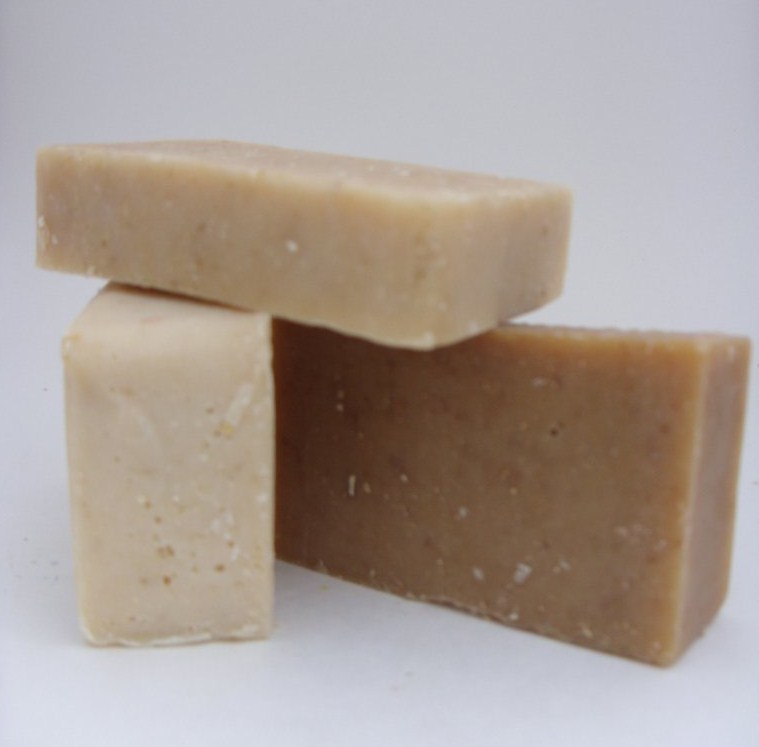
This lovely photo is orange mint goat milk soap. I am going to include it as a spring soap of the month. If you have any soap of the month requests, please give me a holler!
The February scent of the month will be lavender! Updated information on lavender deals will be announced on the news page this week.
If you are to receive a coupon, they are being mailed today. Thank you for your recent newsletter subscriptions!
Last, but not least, my policy is to not change a product, nor will I delete a product, without first asking my customers. For those of you that purchased rose blend goat milk soap, if you are interested in purchasing in the future, let me know. If you wish to purchase more rose blend, I’ll get some on the curing rack! If not, I might discontinue. So, let me know, it is up to you!
Primitive Soap Balls
Posted in Products, tagged Goat Milk Soap, Reflections on January 12, 2009| 19 Comments »
Ingredient Article #4 – Coconut Oil
Posted in Products, tagged Coconut Oil, Goat Milk Soap, Ingredients on January 3, 2009| 4 Comments »
Coconut oil is an excellent skin moisturizer and softener. It seldom causes adverse reactions. It provides bubbly lather and hardness in bars of soap. Coconut oil is often used as a carrier oil in massage oils, creams, lotions, and bath salts. Coconut oil is also touted as a health food, as it contains lauric acid, a medium chain fatty acid that is said to increase HDL (good cholesterol) levels.
When I made my first purchases of base oils for soap making I was rather confused by the various terms associated with coconut oil. Questions arose, such as, what does fractionated mean? What is RBD? Why 76 degree? The purpose of this article is to break down some of that confusion.
Coconut Oil Terminology –
Extra Virgin Organic – the oil is derived from fresh coconut meat, meat that is not dried. This type of coconut oil is more susceptible to heat variances. The shelf life of extra virgin organic coconut oil is not as stable as the oil obtained from the dried coconut meat. This type of coconut oil can be used in cooking.
Fractionated – the oil comes from dried coconut meat. Through a steam distillation process, the triglycerides have been removed, the saturated fats remain. The oil is more heat stable, remains liquid at low temperatures. The oil has a much longer shelf life, and is much less greasy, making it more suitable for soap and skin care formulas.
RBD – the oil comes from dried coconut meat. The oil is refined, bleached and deodorized (RBD). This makes the oil suitable for bath and body formulas, however, it is not suitable for consumption. RBD coconut oil is very resistant to rancidity and oxidation.
Degrees (92, 76) – due to a hydrogenation process, the coconut oil is set to begin melting right below 92 or 76 degrees.
Coconut oil has been an interesting ingredient to research, and I learned a few things! The next article will cover palm oil. I am going to ask for some input regarding that research. There is much concern concerning the harvesting of palm and the depletion of the rain forests.
Ingredient Article #3 – Distilled Water
Posted in Products, tagged Distilled Water, Goat Milk Lotion, Ingredients on December 26, 2008| 3 Comments »
A basic ingredient in many formulas is distilled water. There are definite reasons for using distilled water (not tap, drinking, or purified water).
Distilled water is bottled water. It is obtained from boiling water and condensing the steam. The condensation is collected in a sterilized reservoir, bottle or container.
The condensation that is collected results in water that contains no chemicals, toxins, bacteria or waste. The water also contains no particles. This means that distilled water will not contaminate the sterile product that we are working to achieve, nor will it leave any residues (such as lime or hard water deposits) in our product. Treated drinking water will leave behind these types of deposits.
Since the beginning of time, distilled water has been an essential part of life. In nature, the sun heats and evaporates water, leaving impurities behind. The condensation returns to Earth in the form of precipitation, either rain or snow.
A few extra tidbits regarding distilled water..it is said that Julius Ceaser distilled water to keep his troups well hydrated. Surprisingly, it is still common in many locations for sea water to be distilled to produce clean, safe, drinking water. Interesting!
The next article will cover a base oil commonly used in soap and skin care products, coconut oil.
Ingredient Article #2 – Olive Oil
Posted in Products, tagged Goat Milk Lotion, Goat Milk Soap, Ingredients, Olive Oil, Skin Care on December 22, 2008| 7 Comments »
Olive oil is a popular ingredient in soap and body care products.
For thousands of years, olives have been squeezed or pressed to obtain the oil. This is a photo of a Greek olive press. Many people across the world (especially in European and Mediterranean countries) are still obtaining their olive oil using this laborious method.
It is said that the Egyptians knew the moisturizing benefits of olive oil. They generously applied the oil to their skins, then scraped the oil off, which removed the dirt and left the skin softened.
It is estimated that olive oil was first used in soap around the year 1567. Today we continue to make castile soap, with olive oil being the base oil in the recipe. Castile soap is mild, moisturizing, long lasting, with a creamy low-bubble lather.
There are several types of olive oil. The main types are:
- Virgin – the oil is derived using physical methods (olives are crushed or squeezed)
- Refined – the oil is derived using physical methods, but is treated to reduce strong tastes and acids
- Pomace – the oil is extracted from crushed olives (the pomace) using chemical solvents, then it is refined to make it edible (generally used in commercial kitchens)
Olive oil has many external and internal beneficial properties. Olive oil is an antioxidant, is very cleansing internally to the body. Olive oil can help lower bad cholesterol and raise good cholesterol levels, especially when olive oil replaces unhealthy fats in the diet. Olive oil is very well known for skin moisturizing, especially adding benefits to mature skin. Olive oil is not known to clog the skin pores.
In soap, olive oil is used as a base oil (alone) or with other base oils to help harden the finished product, and to provide extra moisturizing properties to the soap. In lotion and cream products, olive oil leads to a thicker, richer base, and is very beneficial for dry skin.